

My legs used to feel like cement by Thursday. I'm a realtor, so I'm on my feet five or six days a week showing houses, climbing stairs, walking parking lots in heels. I squeeze in workouts wherever I can fit them. By mid-week, my calves were locked up, my sleep was choppy, and I was waking up more tired than when I went to bed. I tried stretching more, drinking more water, going to bed earlier. Nothing clicked until a friend mentioned magnesium glycinate. I was skeptical. A supplement was not exactly the dramatic fix I was picturing. But I picked up a bottle, followed a few simple rules about timing and dose, and within two weeks I noticed a genuine difference in how I felt in the morning. What finally helped was magnesium glycinate, specifically the Double Wood Supplements version, used the right way.
Here is the thing about magnesium: most of us are not getting enough of it from food, and when you're active, you burn through it faster. Magnesium is involved in muscle contraction, nerve signaling, and the deep-sleep stages where your body actually repairs itself. The glycinate form is chelated, meaning the magnesium is bound to the amino acid glycine, which helps it absorb more completely and is gentler on your stomach than cheaper forms like magnesium oxide. If you've tried magnesium before and felt nothing, there is a real chance you were taking the wrong form or taking it at the wrong time. This guide covers both.
If your muscles are sore and your sleep is shallow, this might be the missing piece.
Double Wood Supplements Magnesium Glycinate 500mg is chelated for higher absorption, vegan, non-GMO, and rated 4.7 stars across nearly 6,000 reviews. One bottle is affordable and lasts two months.
Amazon Check Today's Price on Amazon →Step 1: Start with One Capsule and Give It Two Weeks
I see people online going straight to the full 500mg dose on day one and then complaining it made them feel off or loose in the stomach. The smarter move is to start with a single 500mg capsule and stick with it for two full weeks before you decide anything. Your body needs time to build up its magnesium levels. This is not a painkiller. You are not supposed to feel it hit in an hour. Think of it more like filling a tank that has been running low.
The Double Wood Supplements glycinate comes in 500mg capsules and the standard serving is one capsule. That is exactly where I started, and it is what I still take most nights. I have not felt the need to increase it. If you're a larger person or you're training heavily, some people do go to two capsules, but I'd give one capsule a genuine two-week trial before making that call. Write it on the calendar so you don't give up on day five because you're not sure it's doing anything.
One thing worth knowing: if you have a kidney condition or take any medications, check with your doctor before adding any magnesium supplement. That is not a disclaimer I'm throwing in to sound responsible. It genuinely matters because magnesium interacts with certain blood pressure and diabetes medications. For most healthy adults with a normal diet it is a very safe mineral, but your situation is your situation.

Step 2: Time It Right -- Evening Is the Window That Works
Timing is where most people get it wrong. They take magnesium with their morning vitamins and then wonder why they're not sleeping better. Magnesium glycinate has a mild calming effect because glycine supports the relaxation side of your nervous system. That property is not doing you much good at 7am when you need to be on. Take it in the evening, either with dinner or 30 to 60 minutes before you plan to go to sleep.
I take mine right after I finish putting the last kid to bed, which is usually between 9 and 9:30pm. I wash it down with a full glass of water. That timing means the magnesium is circulating when I'm winding down and when my muscles are trying to relax. Most nights I notice I fall asleep faster and I do not wake up at 2am with tight calves the way I used to. It is not sedating. I'm not groggy in the morning. It just takes the edge off that restless-legs, can't-quite-settle feeling.
If you train at night, take it after your workout rather than before. Your muscles are in repair mode in the hours after exercise, and that is a good time to have magnesium available. If you exercise in the morning or afternoon, the evening timing still works fine because you're supporting the overnight recovery phase, which is when the real tissue repair happens regardless of when you trained.
Step 3: Take It with Food or at Least a Full Glass of Water
Magnesium glycinate is one of the gentler magnesium forms, so stomach issues are less common than with magnesium oxide or citrate. But taking any supplement on a completely empty stomach can cause mild nausea for some people. My habit is to take it right after dinner, so there's food in my stomach and it's never been an issue. If you eat dinner early and you're taking it closer to bedtime on an empty stomach, just make sure you drink a full glass of water with the capsule. That alone usually prevents any queasiness.
Avoid taking it with a high-dose calcium supplement at the same time. Calcium and magnesium compete for absorption in your gut when you take them simultaneously at high amounts. If you take a calcium supplement, space it out by at least two hours. A glass of milk with dinner is fine. I'm talking about a 1,000mg calcium pill stacked right on top of your magnesium. That's where you start cutting into the absorption you paid for.

Step 4: Stack It with the Right Habits to Get the Most Out of It
Magnesium glycinate is not a replacement for sleep, hydration, or movement. It works best when those fundamentals are at least reasonably in place. The way I think about it: magnesium is like compound interest on the recovery habits you're already building. If you're sleeping five hours a night and skipping water, the magnesium will barely show up. If you're sleeping seven hours, staying reasonably hydrated, and doing some light movement on rest days, the magnesium makes all of that work a little better.
A few habits that have made a real difference alongside my magnesium routine: I try to do 10 minutes of light stretching or foam rolling before bed on the nights I've had a hard day on my feet. I keep a 20-ounce bottle of water on my nightstand and drink most of it before I turn off the light. And I try to dim the lights in my house at least 45 minutes before bed. None of these are complicated. But stacked with the magnesium, they've taken my sleep from something I dreaded to something I actually look forward to.
If you're also dealing with muscle cramps specifically, it's worth looking at your electrolyte intake in general. Magnesium is one piece of the cramp puzzle, but potassium and sodium matter too. On days when I've sweated a lot, I'll add an electrolyte drink alongside the magnesium at night and the cramps drop significantly. This is not about loading up on supplements. It's about giving your body what it lost during the day.
Step 5: Track Your Results for 30 Days Before You Decide If It's Working
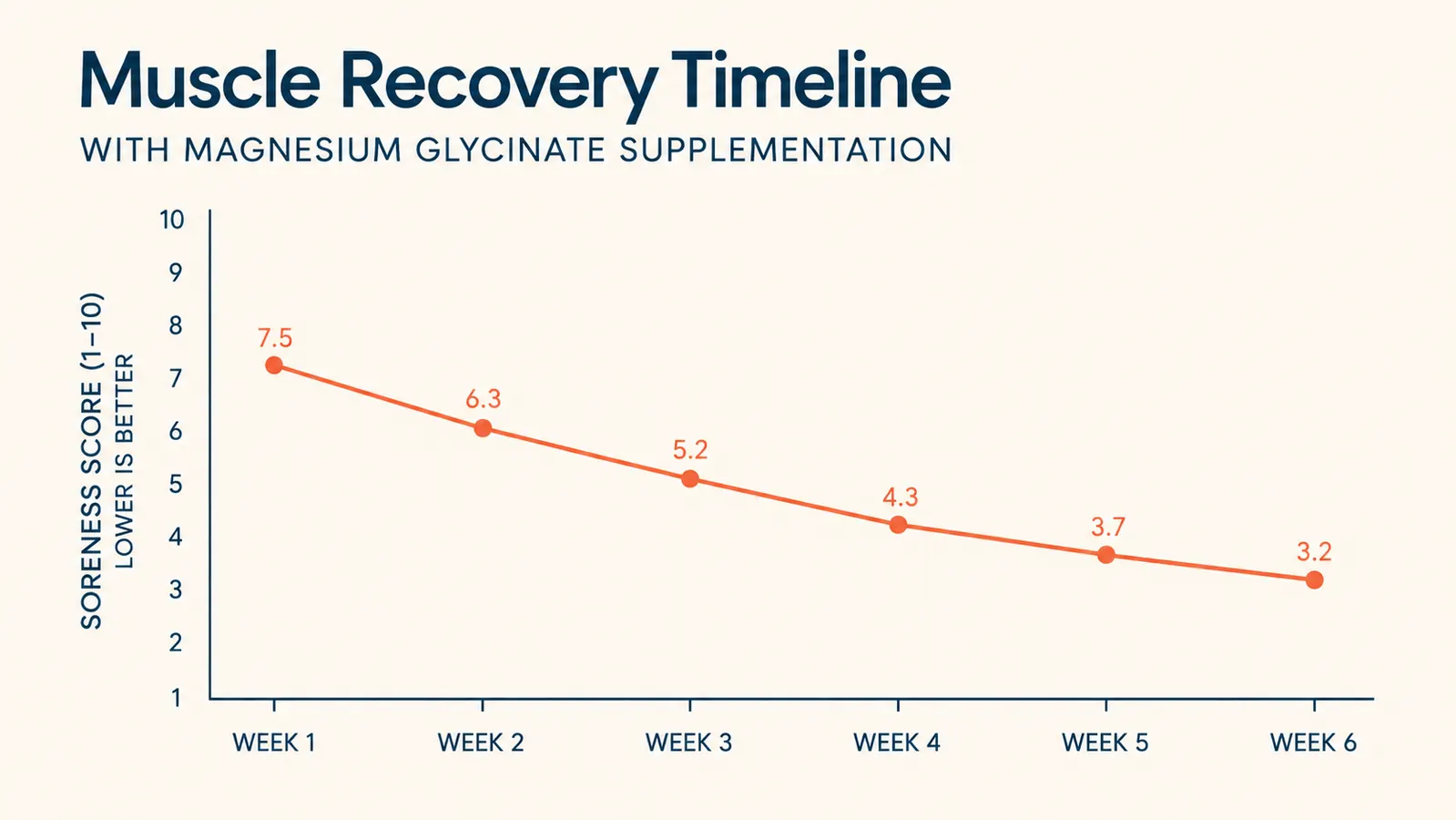
I kept a loose log for the first month. Nothing fancy. I used the notes app on my phone and typed three things each morning: how my legs felt, how many times I woke up, and how rested I felt on a 1-to-10 scale. By day 14, my average was noticeably higher. By day 30, the pattern was clear enough that I knew I'd be ordering another bottle. If I had quit at day seven because I wasn't sure it was doing anything, I would have missed the window entirely.
Magnesium glycinate is not a supplement with a dramatic, obvious effect like caffeine. You're not going to feel it kick in. What you notice is the absence of things: less tightness in your legs, fewer middle-of-the-night wake-ups, calves that don't grab when you point your toes in bed. Those are easy to miss unless you're paying attention. So pay attention. Give it a fair 30 days with consistent evening timing, and you will have a real answer.
Also worth checking: if you've been taking it for 30 days and noticed nothing at all, consider whether your sleep hygiene, stress levels, or diet are working against it. Chronic stress burns through magnesium faster. If you're running on adrenaline every day, you might need more consistent stress management alongside the supplement. That's a longer conversation, but it explains why some people see results quickly and others need to dig a little deeper.
What Else Helps with Muscle Recovery
Magnesium glycinate handles a lot of the overnight piece: the deep sleep, the muscle relaxation, the reduction in that restless tightness that keeps you from settling. But muscle recovery is more than one supplement. Here's what I have found works in combination.
Compression on tired legs during the day makes a real difference in how sore I feel by evening. I started wearing compression knee sleeves during long showing days and the cumulative fatigue is noticeably less by the time I get home. It is a simple, no-effort addition. Read my full review of the Double Wood magnesium glycinate if you want a deeper look at how the supplement itself performed over six weeks of testing.
Protein timing also matters more than most people realize. If you've just finished a hard workout or a brutal day on your feet, getting 20 to 30 grams of protein in within an hour or two gives your muscles the amino acids they need to actually rebuild. Magnesium supports the process, but protein supplies the raw material. Neither one alone is enough. Light movement the next morning, even just a 10-minute walk, also accelerates recovery by moving fresh blood through the tissue that's trying to repair itself. For more on the full benefits side, check out my guide on the 10 benefits of magnesium glycinate for active women -- it covers the broader picture of what this mineral does when your body is under regular physical stress.
By day 14, my average morning-energy score was noticeably higher. By day 30, the pattern was clear enough that I knew I'd be ordering another bottle.
Sore muscles and broken sleep are not inevitable -- they're often a magnesium problem.
Double Wood Supplements Magnesium Glycinate 500mg is chelated for high absorption, vegan, non-GMO, and easy on the stomach. At a low cost for a two-month supply, it is the lowest-cost change I've made to my recovery routine with the clearest results.
Amazon Check Today's Price on Amazon →